Gut resilience is your microbiome's ability to recover after disruptions like illness, antibiotics, stress, or diet changes. Tiny Health's Gut Resilience Score measures that recovery capacity, drawing on your microbiome's composition, diversity, and functional range, so you can see how adaptable your gut is and how to support it.
Your Gut Resilience Score is available for ages 3+ on V4 reports (and higher). Here’s how to find it:
Go to your Results page > New Resilience Score entry-point card.
You can also find it in the See all metrics section of your results. Scroll down to the “Diversity & resilience” category, where you’ll find your GutResilience Score.
Your gut is home to trillions of microbes that are always shifting. They’re influenced by many things, including what you eat, your stress levels, and even your environment.
Microbiome resiliency is all about your gut’s ability to bounce back after stress, illness, antibiotics, or even a late-night fast-food run. A resilient microbiome doesn’t crumble under pressure. It rebounds, repairs, and keeps going.
And while it might sound like a buzzword, microbiome resiliency is grounded in science. We’re exploring what it is, how you can support it through daily choices, and how our Gut Resilience Score can help you track it.
The building blocks of a resilient gut
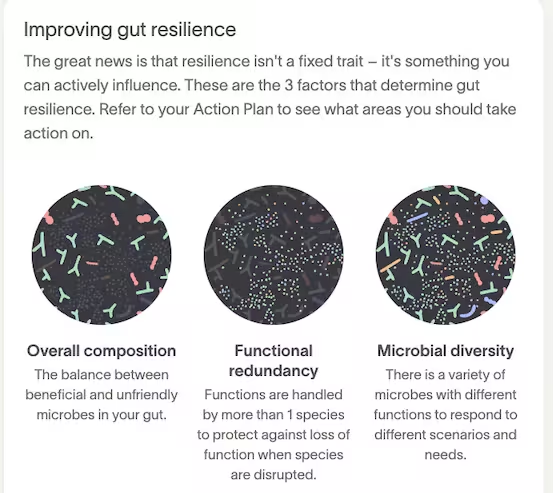
Resilience isn’t about being immune to stressors. It’s about how well you recover. A resilient gut adapts to change while preserving its core functions. Three key features support this kind of stability: overall composition, functional redundancy, and microbial diversity.
Overall (microbiome) composition
The specific composition of your microbiome matters. Certain bacteria—like Faecalibacterium prausnitzii, Bacteroides thetaiotaomicron, and Bifidobacterium adolescentis—have been linked to recovery and resilience [1]. People with more of these recovery-associated bacteria tend to have microbiomes that bounce back faster after a disruption. On the other hand, higher levels of pro-inflammatory or opportunistic microbes may mean your gut is more likely to get thrown off and slower to recover [2].
Functional redundancy
A truly resilient microbiome also has redundancy, multiple species that can perform the same essential jobs [3]. This microbial backup system ensures that even if one species is lost (say, during a round of antibiotics), others can step in to maintain function. Redundant ecosystems are more likely to preserve the production of short-chain fatty acids (SCFAs), like butyrate and acetate, which play key roles in gut barrier health, inflammation control, and metabolic regulation [3].
Microbiome diversity
A diverse microbiome acts like a well-stocked toolbox. Each microbial species plays a unique role—some help digest fiber, others reduce inflammation, and many help keep harmful microbes in check [4]. The greater the variety, the more adaptable your gut is in the face of stress, illness, or dietary changes.
Tiny Health’s Gut Resilience Score
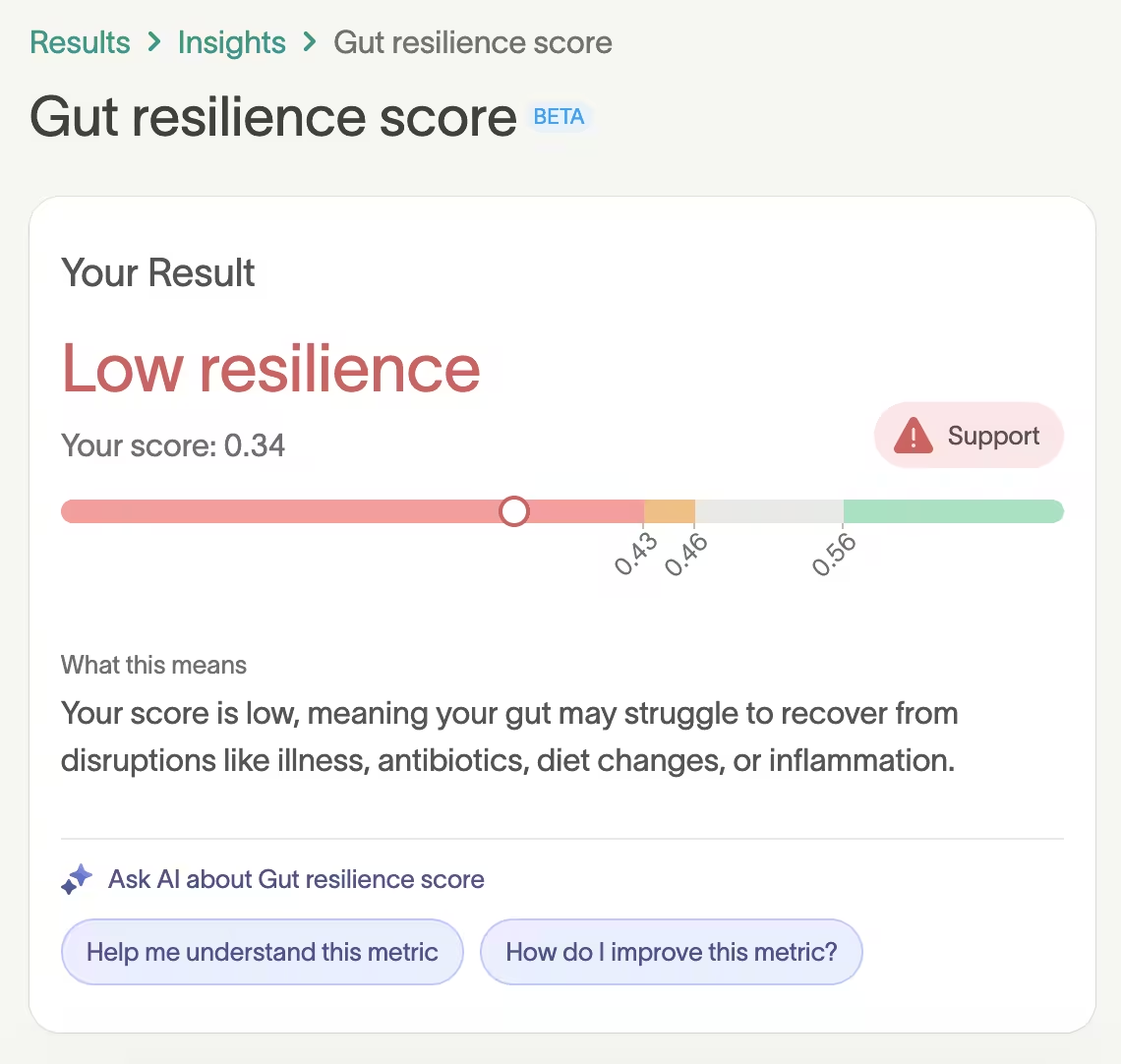
Now that we've covered what gut resilience is, let's turn to what it looks like for you. Our Gut Resilience Score uses a machine learning algorithm to gauge how well your microbiome may be able to recover after disruption.
Your gut's makeup is the main driver of the score here.
And we use it to answer a key question: Does your microbiome have what it takes to bounce back after stress? Whether your score lands Low, High, or somewhere in between, it's built to show you how adaptable your gut is, and what you can do to support it.
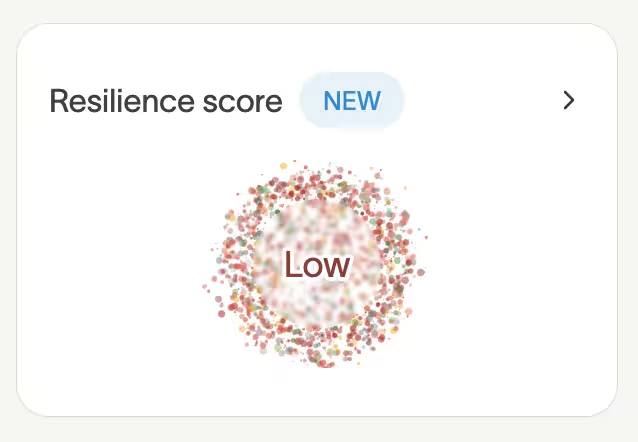
Your Gut Resilience score card is grouped with your Microbiome Summary Score, and your Microbiome Age, on your Results homepage.
A sample Gut Resilience Score showing low resilience, which means the gut may need support to recover from disruptions.
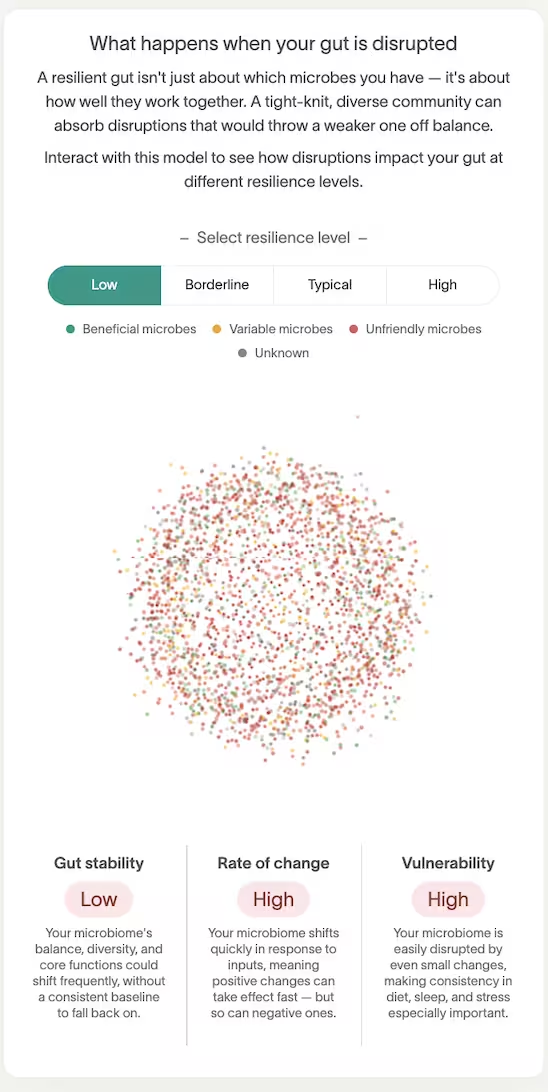
Just below your score is the 'What happens when your gut is disrupted' interactive card. You can use the green toggle to move across four resilience levels: Low, Borderline, Typical, and High. Each animated setting shows how the microbes behave at that level of resilience. Notice that when you open the card, it'll default to your resilience level.
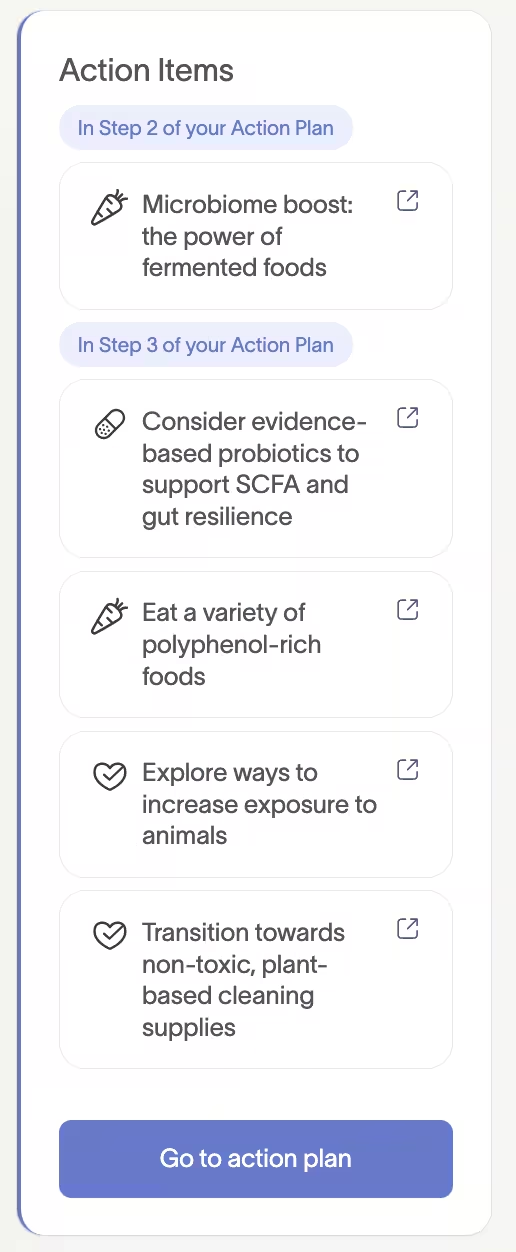
Your action items live in different steps of your Action Plan, and the tags show you where each one comes from.
Why measure resiliency at all?
Because understanding how your gut responds to change gives you more than just a snapshot of what’s there. It tells you how your microbiome behaves over time. Our Gut Resilience Score can help you anticipate how your body might react to antibiotics, illness, or major dietary shifts, and can guide you in making targeted decisions about probiotics, prebiotics, and nutrition. Whether your goal is symptom relief, improved immunity, or supporting long-term health, knowing your Gut Resilience Score gives you a foundation to build from. Plus, you’ll find research-backed strategies to support your microbial resilience over time in your Action Plan.
What your Gut Resilience Score tells you
Here’s what a low or high score could mean for you:
🔻 If your score is low
Your microbiome may be more sensitive to change, meaning that everyday stressors, like a poor night’s sleep, dietary slip, or illness, could have a bigger impact. This may reflect low diversity, the absence of recovery-associated species, or a microbiome that has struggled to bounce back from past disturbances.
Low resiliency doesn't mean something is wrong. It simply means your gut might benefit from added support. Changes in diet, lifestyle, or targeted probiotics can help restore balance and improve your microbial recovery capacity over time.
🔺 If your score is high
This means your gut shows signs of stability and adaptability. You likely have recovery-associated species and signs of protective microbial activity. That said, even a resilient gut isn’t immune to challenges. So if you're trying to achieve specific goals (like reducing inflammation or improving symptoms), change may take longer. Resilience can sometimes mean your microbiome resists even positive disruption.
Your Action Plan will show your current level of resilience and provide personalized steps to maintain or enhance it, whether you’re recovering from a setback or working toward new goals.
Ways to support a resilient (and healthy) microbiome
So how do you nurture a microbiome so that it’s both resilient and balanced? The answer lies in everyday habits, especially what you eat and how you manage change.
Eat more fiber
Fiber is the #1 fuel for your gut bacteria, but not all fiber is the same. Different types feed on different microbes, supporting diversity and balance in your gut ecosystem. For example, some fibers promote butyrate-producing bacteria, while others help reduce inflammation or support motility [5].
When you eat a wide range of fiber-rich foods, like fruits, vegetables, legumes, nuts, and whole grains, you’re essentially offering your microbiome a buffet that helps it thrive. A more expansive diet encourages more diverse microbes, which supports both resilience and overall gut function [6].
Not sure where to begin? Check yourAction Plan for specific fiber-rich foods that support your gut’s current needs, and can help bring balance where it’s needed most.
Use probiotics and prebiotics thoughtfully
Probiotics (live bacteria in supplements or fermented foods) can help, but they’re not a one-size-fits-all solution. Some people may not notice much benefit, especially if their gut isn’t in a place to respond well. Prebiotics, fiber compounds that feed beneficial bacteria, may have more impact. Ingredients like inulin or galactooligosaccharides (GOS) can promote stability and resilience in the microbial community [1].
Embrace personalized nutrition
Not all guts are created equal. Thanks to differences in genetics, lifestyle, and even where we live, people respond differently to the same foods or supplements [7]. If you’ve ever wondered why your friend thrives on yogurt while you just get bloated, it might come down to your unique microbiome. Personalized approaches, including microbiome testing, can help tailor strategies that work for you.
Be gut-savvy during life transitions
Antibiotics often disrupt your microbiome, but so can everyday changes in your routine. Life events like travel, seasonal shifts, stress, poor sleep, and dietary changes can all reshape your gut in subtle (and sometimes not-so-subtle) ways.
If you’re navigating any of these shifts, consider giving your microbiome extra support. This might mean increasing your fiber intake, adding fermented foods, or taking a break from processed meals.
When antibiotics are unavoidable, you can also support recovery by focusing on probiotics, fiber, and prebiotics to help beneficial bacteria rebound.
Gut resilience is a daily practice
We often think of gut health as a fixed state: you’re either in balance or you’re not. But in truth, it’s more like a dance, constant movement, adjusting to life’s rhythms, responding to the unexpected. Microbiome resiliency allows your gut to adapt, recover, and protect you through it all.
The choices you make every day, from what’s on your plate to how you handle stress, can shape your microbiome’s ability to thrive in the long run. So rather than chasing an ideal gut, try aiming for a resilient one, flexible, adaptable, and ready for whatever life throws your way.
One of the most powerful things you can do is test your gut microbiome, not just once, but at different points in your health journey.
Test when you’re feeling well - get a baseline to understand what balance looks like for you.
Test after a disruption (like illness, antibiotics, or travel) to see how your microbiome responds.
Test again after recovery to evaluate your gut’s resiliency in real time.
Tiny+ Memberships, designed to track your family’s gut health and resilience over time, provide meaningful insights to help support long-term wellness.
What you should know
Resilience Score FAQ
Who gets a Gut Resilience Score?
Anyone with a gut health test, ages 3 and up, on V4 reports and higher. Under 3, you'll see the Gut Maturation Index instead, a better fit for an early-developing microbiome.
Is the disruption visual built from my actual gut data?
No. There are four preset animations, one per resilience level (Low, Borderline, Typical, High). Anyone at the same level sees the same visual. It illustrates what resilience looks like at your level, not your personal microbiome.
Do the dots represent specific microbes in my gut?
No. The dots help explain the science. They don't chart your gut. They're a visual stand-in for how a microbiome at each level tends to behave, showing qualities like tightness, order, and how easily things get thrown off balance.
Why do the interactive dots sometimes look different from session to session?
They don't reflect anything personal. The animation resets each time you switch tabs, but quick toggling can occasionally carry over sizing from a previous view.
Trust your gut.
Get to know your microbes with an easy, 5-minute at-home test from Tiny Health. Unlock deep gut health insights and personalized recommendations for your diet, supplements, and lifestyle.
M. Fassarella, E. E. Blaak, J. Penders, A. Nauta, H. Smidt, and E. G. Zoetendal, “Gut microbiome stability and resilience: elucidating the response to perturbations in order to modulate gut health,” Gut, vol. 70, no. 3, pp. 595–605, Mar. 2021.
S. K. Dogra, J. Doré, and S. Damak, “Gut Microbiota resilience: Definition, link to health and strategies for intervention,” Front. Microbiol., vol. 11, p. 572921, Sep. 2020.
K. Cross, N. Beckman, B. Jahnes, and Z. L. Sabree, “Microbiome metabolic capacity is buffered against phylotype losses by functional redundancy,” Appl. Environ. Microbiol., vol. 91, no. 2, p. e0236824, Feb. 2025.
C. Martin-Gallausiaux, L. Marinelli, H. M. Blottière, P. Larraufie, and N. Lapaque, “SCFA: mechanisms and functional importance in the gut,” Proc. Nutr. Soc., vol. 80, no. 1, pp. 37–49, Feb. 2021.
A. Safarchi, G. Al-Qadami, C. D. Tran, and M. Conlon, “Understanding dysbiosis and resilience in the human gut microbiome: biomarkers, interventions, and challenges,” Front. Microbiol., vol. 16, p. 1559521, Mar. 2025.
T. S. Ghosh, F. Shanahan, and P. W. O’Toole, “Toward an improved definition of a healthy microbiome for healthy aging,” Nat. Aging, vol. 2, no. 11, pp. 1054–1069, Nov. 2022.
C.-Y. Chen et al., “Baseline microbiome composition impacts resilience to and recovery following antibiotics,” bioRxiv, 31-Mar-2024.
.avif)