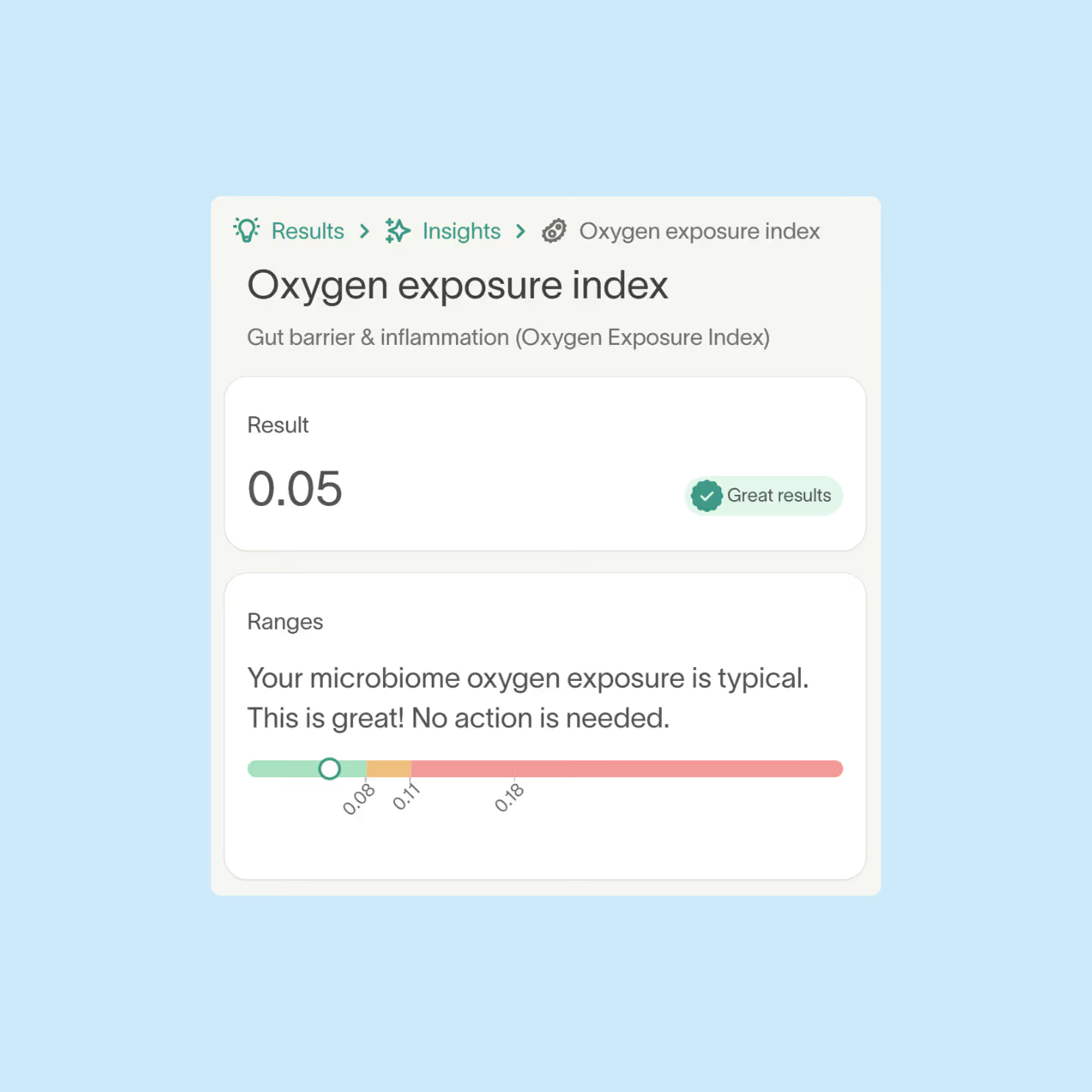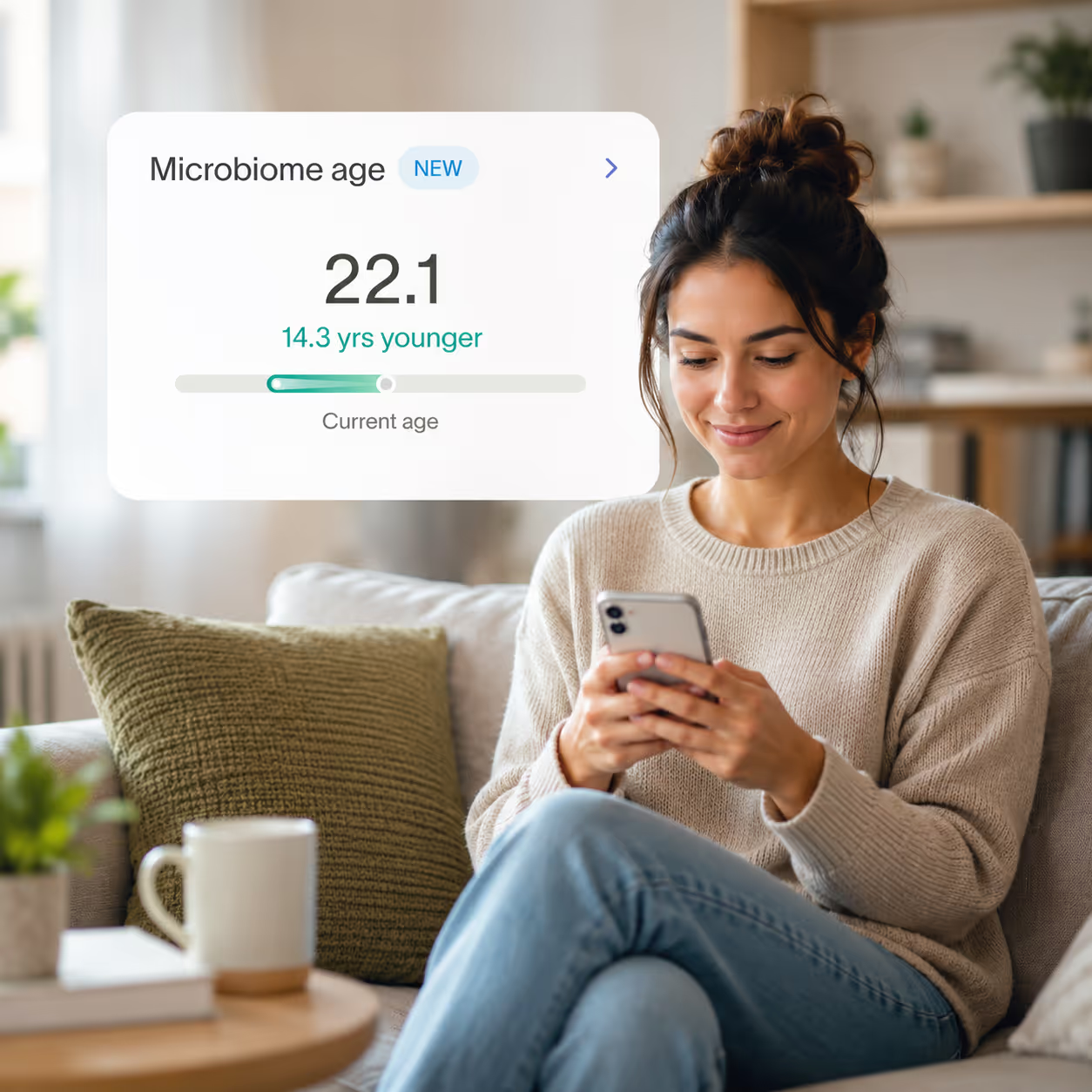
We often think of aging in rites of passage or candles on a birthday cake. You may notice some stray gray hairs, lines on your face, or less stamina.
But we all age differently. Some people stay energetic and bouncy well into their 80s, while others feel tired or get sick more easily. The same thing can happen in your gut. Your microbiome may age faster or slower depending on many factors.
In this article, you'll learn what Microbiome Age means, how we calculate your score, why it matters for your health, and the specific steps you can take to optimize your gut for longevity.
What is microbiome aging, and how does it differ by person?
As we age, our gut microbiome can change, but not always in the same way. In many older adults, especially those who are frail or have chronic conditions, gut microbial diversity tends to decline. This means there are fewer types of bacteria, particularly those that support the gut lining and help keep the immune system in balance [1].
But this doesn’t happen to everyone. Some people, including many centenarians and adults who age in good health, maintain a gut that stays diverse and resilient over time [2], [3], [4], [5]. This diversity is associated with a more balanced and stable microbial community structure, which is considered a marker of resilience and healthy aging.
Studies show that these healthy older adults often have gut microbiomes that look more youthful and unique [2], [4]. They tend to have more beneficial bacteria that help manage inflammation and support metabolism. These microbes are linked to the production of helpful compounds like short-chain fatty acids (SCFAs) and are also involved in breaking down chemicals from foods and the environment, processing healthy fats, and supporting the metabolism of tryptophan, an amino acid linked to gut and immune health [2], [4]. All these characteristics may actually protect these healthy older adults from infections and age-related diseases [6].
To understand why this matters, we need to look at how the gut and immune system influence each other as we age.
Inflammaging: how the gut can fuel chronic inflammation as we age
As we get older, many people develop a slow, ongoing type of inflammation in the body. Scientists call this inflammaging, and one of the biggest drivers of this process is changes in the gut microbiome [7].
As we previously noted, the gut often loses diversity as we age, and beneficial bacteria that make SCFAs may decrease. At the same time, other microbes that can trigger inflammation may become more abundant [2], [3], [4], [5].
These imbalances can weaken your gut barrier. This barrier normally acts like a protective wall, keeping unwanted substances inside the gut. If the gut becomes “leaky,” bacterial byproducts like hexa-LPS can slip into the bloodstream. These signals wake up the immune system and lead to higher levels of inflammatory messengers, keeping inflammation turned on throughout the body [8].
Over time, this creates a cycle: changes in the microbiome weaken the gut barrier, inflammation increases, and that combination makes it harder for beneficial microbes to thrive. This loop can contribute to tissue damage and many age-related conditions [8].
How to find out your microbiome age in your results
Tiny Health has launched our proprietary Microbiome Age metric for adult stool samples, which reflects how “young” or “old” your gut microbiome appears to be. Rather than just counting birthdays, we use a machine-learning approach that identifies patterns in your microbiome to estimate how old your gut looks compared to others of your age and sex.
You can find this new metric, available in version 5.0 and above, right on your Results page, and in the Diversity & Resilience section of your report.
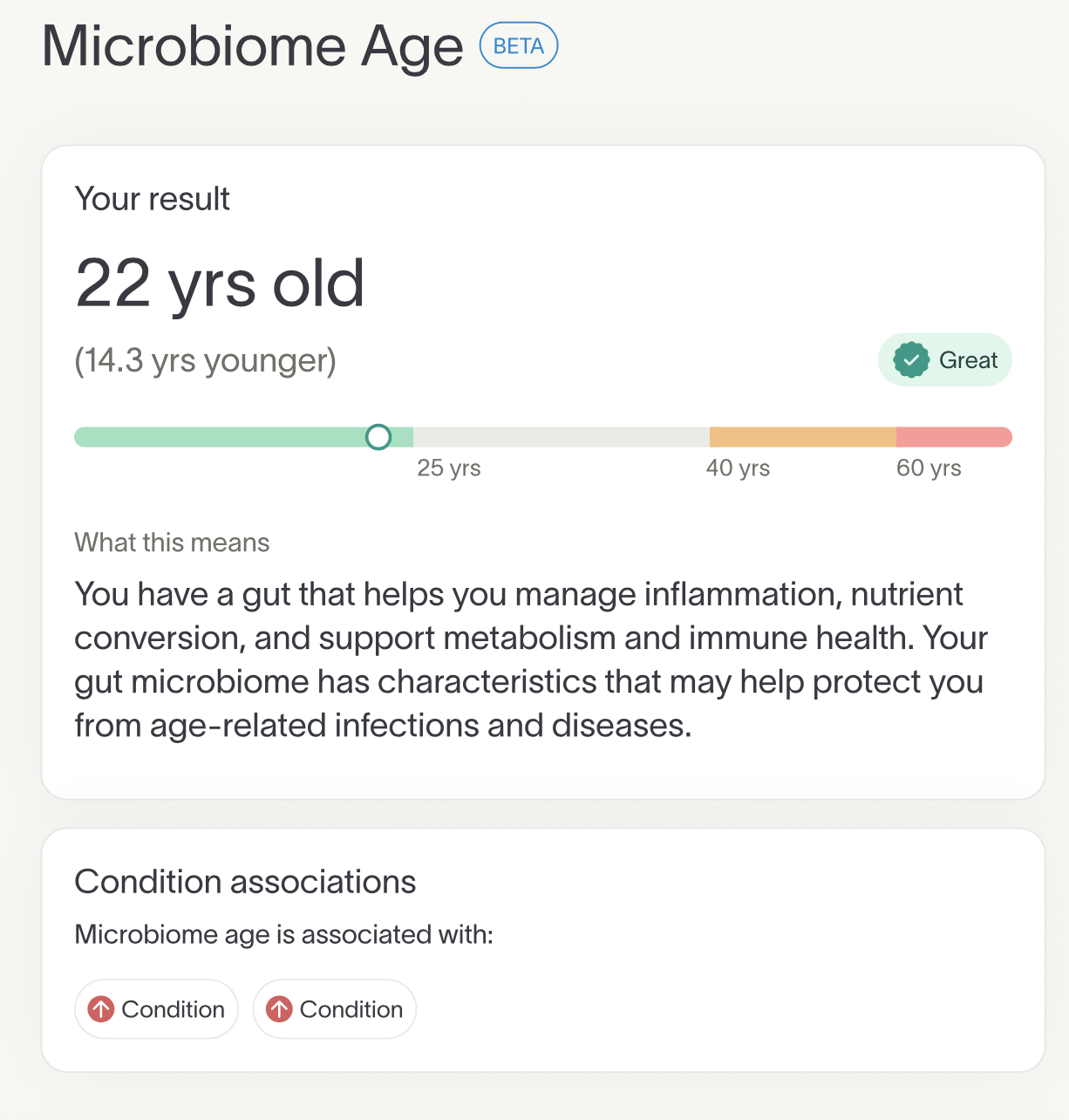
This Microbiome Age top card shows your result in years, how far it sits from your chronological age, and a rating ranging from Great to Needs support. The color-coded bar shows where your gut age falls relative to a healthy range, with green indicating a younger, more resilient microbiome and orange and red signaling areas for improvement.
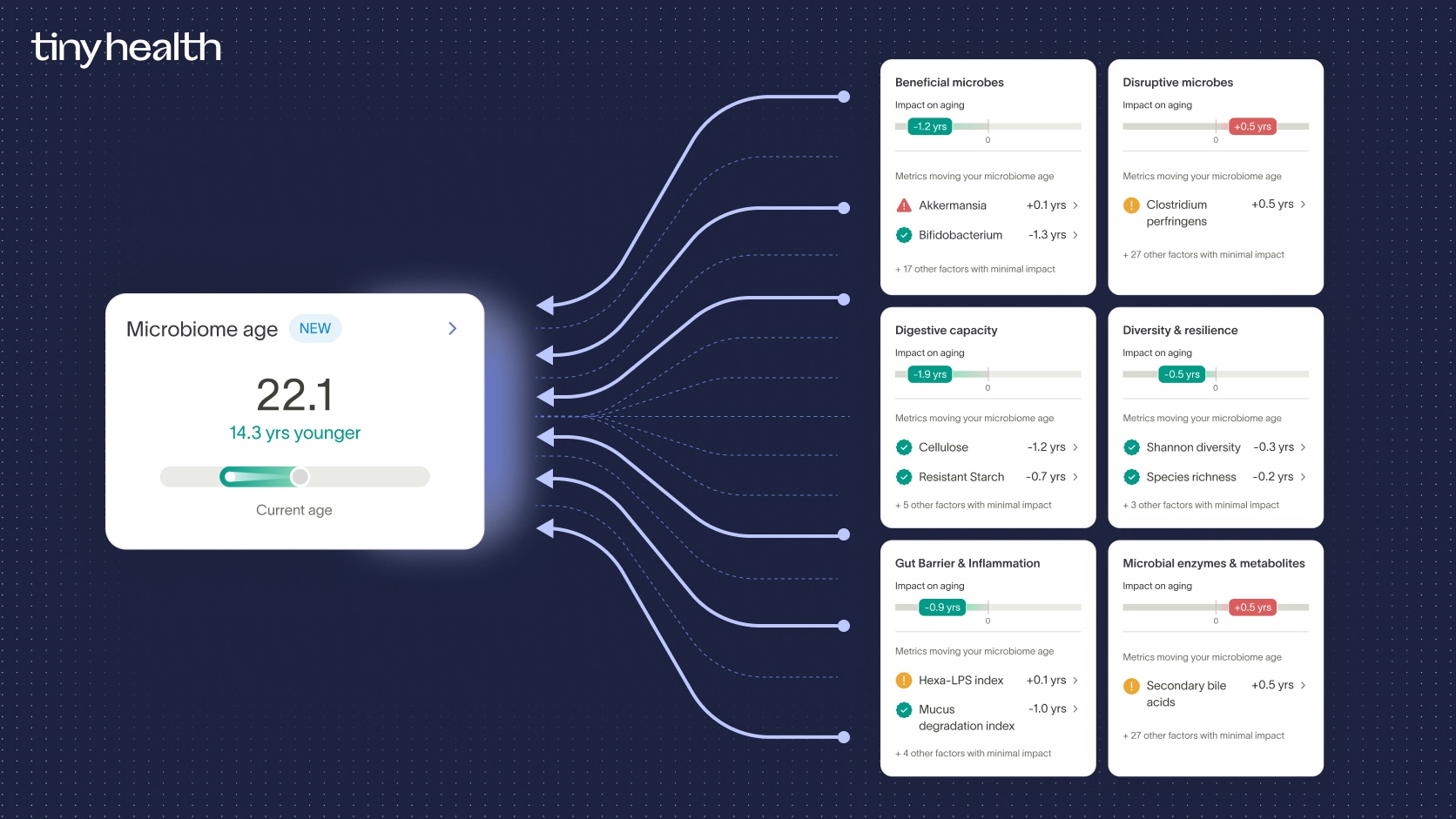
In general, a more youthful microbiome is desirable because it tends to reflect higher microbial diversity, stronger gut barrier function, and lower levels of chronic inflammation. In contrast, a microbiome that appears older than expected for your age may signal reduced resilience or imbalances that develop over the years.
If your Microbiome Age is older than you are, or needs improvement or support, don’t panic. There are many things you can do to decrease it (more on that later).
Bacteria and functions that make your microbiome age faster or slower
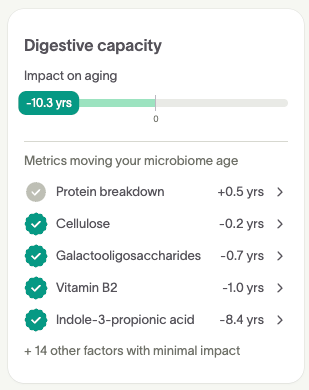
Inside your Tiny Health Microbiome Age metric, you’ll find bacteria and functional traits linked to a “younger” microbiome, including:
- Bifidobacterium. A keystone genus particularly abundant in youth and linked to reduced inflammation and better immune function [9].
- Faecalibacterium. A major producer of butyrate, one of the most important SCFAs for gut health [10].
- Vitamin B2. Essential for energy metabolism and neurotransmitter balance [11].
- Indole-3-propionic acid. A helpful compound made by gut bacteria that may help support gut barrier health and help protect cells from damage [12].
You’ll also find bacteria and functions that can push your Microbiome Age higher. These can potentially damage the gut lining and trigger inflammation:
- Klebsiella. Often enriched in unbalanced states and associated with inflammation [1].
- Clostridioides difficile. An opportunistic bacterium that can grow too much after antibiotic use and may cause diarrhea and inflammation [13].
- Trimethylamine. A compound made by some gut bacteria that can be converted in the liver into TMAO, a molecule linked to heart and metabolic health [14].
- Hexa-LPS. A molecule found on certain bacteria that can strongly activate the immune system and increase inflammation [15].
Why your Microbiome Age matters
Knowing your Microbiome Age can help you understand how well your gut is supporting your overall health. A younger microbiome Age is usually linked to:
- A stronger gut barrier. No “leaky gut” means fewer inflammatory triggers escaping into your bloodstream.
- Better digestion of fiber and carbs. More efficient SCFA production supports everything from immune function to brain health.
- Lower levels of inflammation. Reduced inflammaging may lower the risk of developing chronic illnesses such as heart disease.
- More "bounce back" after getting sick. A diverse, resilient microbiome helps your immune system respond effectively to challenges.
- Better cognitive function. Microbial metabolites support brain health [16].
- Improved metabolic health. A younger microbiome is associated with better glucose control and healthier cholesterol levels [17].
How lifestyle and environment affect microbiome aging
Your individual biology isn’t the whole story. Lifestyle and environmental factors strongly shape how your microbiome ages over time.
As you get older, your diet may become less varied, medications may become more common, physical activity may decline, and you may get more infections. Each of these factors can place stress on your gut microbiome. Over time, life stressors can push your microbiome toward a pattern that looks older, even if you’re not. Together, this helps explain why microbiome aging reflects lived experience, not just the passage of time.
Several key lifestyle and environmental factors influence how quickly or slowly your microbiome ages:
Diet
The single most powerful modulator of your microbiome. Studies show that a Mediterranean diet rich in fiber, fruits, vegetables, and fermented foods can increase SCFA production and reduce markers of frailty and cognitive decline in older adults [18], [19].
Medications
Antibiotics can dramatically reshape your microbial community. Other common medications taken by older adults, from proton pump inhibitors to metformin, also influence gut bacteria [1], [20], [21].
Physical activity
Exercise has been shown to increase beneficial bacteria like Faecalibacterium and reduce disruptive Proteobacteria in animal models and elderly individuals, helping to maintain youthful diversity [22], [23].
Stress
Chronic stress may reduce beneficial bacteria like Lactobacillus and promote the growth of disruptive species [24], [25].
6 ways to turn back the clock on your Microbiome Age
Yes! Your Microbiome Age isn't permanent. Because your microbes react to what you eat and how you live, you can turn back the clock by:
- Eat diverse plants. Fiber is the favorite food of "younger" microbes. Aim for at least 30 different plant foods per week, including vegetables, fruits, whole grains, legumes, nuts, and seeds. Each type of fiber feeds different beneficial bacteria.
- Move your body. Physical activity helps maintain a diverse gut ecosystem and can reverse some age-related changes. Even regular walking makes a difference.
- Prioritize fermented foods. Yogurt, kefir, kimchi, sauerkraut, and other fermented foods introduce beneficial microbes and support SCFA production.
- Support your gut during medication use. Some medications, including antibiotics, can temporarily change the gut microbiome. When these treatments are needed, supporting gut health during and after treatment—with guidance from a healthcare provider—can help support long-term gut health.
- Manage stress. Chronic stress accelerates microbial aging. Finding ways to reduce stress supports a healthier, younger microbiome.
- Follow your Action Plan. Your Tiny Health results come with personalized steps to help you build a resilient gut based on your unique microbial composition, and potentially reverse your gut’s microbiome age.
What personalized longevity means for you
There is no such thing as a perfect gut. A healthy microbiome looks different for everyone. The goal isn't to hit a specific Microbiome age but to make sure your gut is resilient enough to support you at any age.
Aging doesn't have to mean decline. With the right habits, your gut can stay youthful and resilient for years to come. The science is clear; the relationship between your microbiome and aging is bidirectional. Your lifestyle shapes your microbes, and your microbes shape how you age.
By understanding and nurturing your gut, you're not just supporting digestive health. You're investing in your immune system, your brain, your metabolism, and ultimately, your healthspan, the number of years you live in good health.
To find your Microbiome Age baseline, an Adult Gut Health Test provides a clear snapshot of where you stand. Your personalized Action Plan includes recommendations to help you feel more resilient as you age.